loader
Rural Organisations for Social Affairs (ROSA)

Agricultural Funding GrowUp Project by Krishi Association

Project OverviewThe Agricultural Funding GrowUp Project by Krishi Association was initiated to transition conventional, small-scale farming into a modern, commercially viable, and sustainable investment model. Traditional smallholder farmers frequently suffer from financial exclusion, a lack of modern agronomic resources, and systemic exploitation by middleman networks, which limits crop yields and keeps households in poverty. To address these challenges, this strategic initiative serves as an institutional bridge to channel private sector investments into grassroots agriculture. The overall goal is to establish financial equity, optimize crop productivity, and ensure long-term food security for marginal growers across Bangladesh. Key Activities & ImplementationROSA NGO executes this project by leveraging the innovative "GrowUp" digital tech platform to coordinate transparent field operations. Urban investors and institutional funds are connected directly with verified field-level agricultural projects to finance them. Rather than just providing cash loans, the project supplies farmers directly with high-quality seeds, organic fertilizers, and smart farming tools to eliminate the risk of adulterated inputs. Field officers utilize secure cloud databases and real-time data tracking to closely monitor crop management and harvest cycles, ensuring that profits are shared according to predefined, equitable ratios between the investors and the growers. Impact & Expected OutcomesThis pioneering agro-investment framework delivers immediate economic and environmental benefits by securing crucial funding for marginalized farmers and reducing their reliance on predatory local money lenders. By introducing climate-smart farming tech, the project significantly reduces production costs while driving a substantial inflation in seasonal crop yields. The short-term impact is the stabilization of rural household income and a minimized risk of post-harvest waste. Over the long term, the project completely transforms traditional farming into a highly profitable asset class, ensuring commercial sustainability and structural economic empowerment across regional agricultural belts. 

Sustainable Fishery Development Project

Project OverviewThe Sustainable Fishery Development Project was initiated by ROSA NGO to address the critical challenges of overfishing, environmental degradation, and economic instability within vulnerable aquatic regions. Traditional fishing communities frequently suffer from depleted fish stocks and fractured livelihoods due to a lack of sustainable practices and modern resource management. This project was launched to eliminate these ecological and financial vulnerabilities. The primary purpose of the initiative is to promote responsible resource conservation while ensuring long-term financial security and economic stability for grassroots fishing families, successfully balancing marine biodiversity with human welfare. Key Activities & ImplementationROSA NGO implements this project by training local fishers in sustainable harvesting techniques and responsible resource management. To minimize the ecological footprint, the initiative introduces eco-friendly selective gear to reduce bycatch and deploys modern, sustainable aquaculture methods that effectively relieve pressure on wild fish populations. Implemented in highly affected aquatic zones, the project engages local fishing communities, regional cooperatives, and environmental organizations in a collaborative co-management framework. Field teams actively partner with marine experts and management authorities to map and monitor local aquatic resources, ensuring all strategies align with scientific data. Impact & Expected OutcomesThe project delivers profound long-term ecological and economic benefits by preserving vital marine ecosystems and protecting regional biodiversity. By connecting local fishing cooperatives directly with premium markets that value certified, sustainable practices, the initiative guarantees fair compensation and significantly enhances the annual income of marginal fishers. The short-term outcomes include a visible reduction in chemical water pollution and habitat destruction. Over the long term, the project fosters deep community resilience against climate shocks and economic fluctuations, establishing a highly sustainable model for the regional blue economy.

Fair Trade in Agriculture Project

Project OverviewIn many rural agricultural sectors, smallholder farmers routinely face unfair pricing structures and systemic exploitation by traditional middleman networks. Due to a lack of transparent market data and collective bargaining power, marginal growers are often unable to cover their baseline production costs, leading to deep generational poverty. The Fair Trade in Agriculture Project was launched to address this severe market friction. The overarching objective of this strategic initiative is to establish transparent, ethical, and equitable market access, ensuring that hardworking producers receive fair value for their yields to achieve lasting economic independence. Key Activities & ImplementationThe project focuses on deep market analysis and direct field interventions to systematically dismantle exploitative trading channels. ROSA NGO connects regional farmers directly with ethical corporate buyers and large wholesale markets, eliminating middlemen entirely. In collaboration with international trade organizations, the project establishes rigorous fair trade standards and deploys transparent digital pricing platforms. Local agricultural associations and farming cooperatives are heavily involved in the implementation, receiving intensive capacity-building training in commercial negotiation, financial management, and contract-farming compliance to confidently navigate modern supply chains. Impact & Expected OutcomesThis market-driven intervention provides direct economic empowerment, enabling marginal growers to reliably increase their household earnings. Armed with fair compensation, farming families are structurally empowered to reinvest capital back into modern agricultural inputs, micro-enterprises, and quality higher education for their children. Short-term impacts include immediate price stabilization and minimized transactional friction. In the long term, the project builds immense community resilience against volatile market uncertainties, creating a highly equitable agricultural ecosystem where rural producers thrive with absolute dignity and financial security. 

Agricultural Empowerment Project: Right Seeds and Pesticides Supply

Project OverviewThe Agricultural Empowerment Project: Right Seeds and Pesticides Supply was established to counter the widespread vulnerabilities caused by low-quality farming inputs, chemical adulteration, and lack of modern agronomic knowledge. Rural and peri-urban agricultural communities face stagnant crop productivity and severe soil degradation due to the misuse of toxic chemical inputs. Initiated to protect both livelihoods and ecosystems, this project seeks to enhance seasonal crop productivity and secure regional food safety. The central goal is to transition conventional farming into a highly productive, environmentally friendly, and climate-smart model by equipping growers with proper resources. Key Activities & ImplementationROSA NGO begins implementation by conducting thorough, localized needs assessments to pinpoint regional soil and crop requirements. Based on these findings, field officers supply high-yield, climate-suitable seeds alongside eco-friendly organic pesticides. The project coordinates structured "Farmer Field Schools" to deliver technical training on optimal planting techniques, responsible pesticide application, and biological pest control. Operating in close coordination with local farming groups and government agricultural extension services, the project ensures a seamless delivery framework that brings modern, data-driven agricultural expertise directly to the doorsteps of resource-challenged farmers. Impact & Expected OutcomesThe immediate outcome of this intervention is a significant inflation of crop yields per hectare, directly translating into improved household food security and enhanced financial well-being for marginal families. By substituting toxic inputs with organic, eco-friendly alternatives, the project preserves regional biodiversity, prevents chemical runoff into local water bodies, and protects vital soil health. Long-term benefits include extensive knowledge transfer that empowers local communities to remain self-reliant. By establishing firm bonds with research institutions and trusted suppliers, the project embeds institutional sustainability into the regional agricultural architecture.

Asil Chicken Farm Project

Project OverviewRelying solely on seasonal traditional crop cultivation leaves rural and peri-urban families highly vulnerable to climate shocks and unpredictable economic downturns. To mitigate these systemic financial strains, the Asil Chicken Farm Project was conceptualized as a dedicated livelihood diversification initiative. The project targets communities with viable agricultural space but severely restricted income avenues. By introducing structural, high-value indigenous poultry farming, the initiative addresses the root causes of rural poverty and malnutrition, aiming to build an independent, reliable, and year-round source of alternative cash flow for vulnerable households. Key Activities & ImplementationImplementation begins with the careful identification of participants through local agricultural cooperatives. ROSA NGO delivers comprehensive technical training covering scientific poultry rearing, bio-security measures, disease management, and entrepreneurial business skills. Following training, participants receive comprehensive starter kits containing high-breed Asil chickens, specialized feed, and modern shelter equipment. To ensure flock health and minimize asset mortality risks, the project coordinates regular veterinary support and vaccination camps. Furthermore, field teams actively facilitate direct market access by linking poultry producers directly with urban restaurants, retail buyers, and commercial catering channels. Impact & Expected OutcomesThe project drives rapid socioeconomic upliftment by converting traditional households into profitable micro-poultry enterprises. In the short term, participants secure a steady, daily income stream through the sale of organic eggs and premium Asil poultry meat, which also directly improves household nutritional intake. Long-term outcomes focus on the development of resilient business acumen and localized entrepreneurship skills among rural women and youth. By maintaining ongoing market collaborations and fostering eco-friendly waste management, the initiative creates a highly sustainable, self-replicating economic model across regional agricultural belts. 

Entrepreneurship Development Project

Project OverviewDeep-rooted poverty and structural unemployment in both urban and rural settings are often exacerbated by a lack of accessible business capital, professional mentorship, and technical marketing skills. Aspiring individuals frequently possess innovative local business ideas but remain trapped due to limited economic opportunities and financial exclusion. The Entrepreneurship Development Project was launched to break this cycle. The core purpose of this capacity-building program is to empower ambitious individuals with the comprehensive tools, financial literacy, and operational resources required to launch, scale, and sustain independent micro-enterprises, driving localized job creation. Key Activities & ImplementationROSA NGO executes this project by delivering structured, comprehensive training programs focused on fundamental business planning, corporate compliance, cash-flow management, and modern digital marketing. To bridge the gap between theory and practice, the project connects participants with experienced professionals for long-term mentorship. Field teams actively facilitate direct access to flexible microfinance assets, starter grants, and specialized sector-specific workshops. The operational approach leverages active engagement with local business chambers, trading networks, and industry associations, building a highly collaborative, supportive, and resourceful local entrepreneurial ecosystem. Impact & Expected OutcomesThe direct impact of the project is the successful transition of unemployed individuals and traditional workers into self-reliant, successful business owners. In the short term, the project stimulates local economies, creates immediate employment opportunities, and elevates household income levels. Long-term indicators show a profound enhancement in community financial resilience against broader economic fluctuations. By fostering a culture of self-care and innovation, and establishing community-based cooperative enterprises, the project leaves behind a permanent, self-sustaining framework for regional economic liberation and sustainable community development. 
Handicapped and Blind Education Project

Project OverviewPhysically and visually impaired individuals in rural and urban areas routinely face severe educational barriers, deep social stigma, and systematic exclusion from mainstream economic activities. Due to a lack of specialized learning infrastructure and trained educators, disabled citizens are often relegated to a life of structural dependency. The Handicapped and Blind Education Project was initiated to dismantle these barriers. The overarching purpose of this humanitarian initiative is to facilitate fully inclusive, accessible, and high-quality education, empowering participants with the specialized knowledge, functional literacy, and digital resources needed to lead dignified, independent lives. Key Activities & ImplementationThe project acts as a vital bridge, collaborating directly with specialized schools and educational institutes to design highly customized academic curricula. ROSA NGO procures and integrates state-of-the-art assistive technologies, including braille learning devices, tactile graphics, and digital screen-reading software. Simultaneously, the project hosts rigorous capacity-building workshops for educators, training them in inclusive teaching methodologies. At the community level, field teams partner with disability advocacy groups and local leaders to host sensitization campaigns, fostering an empathetic environment that encourages the active enrollment of disabled children. Impact & Expected OutcomesThis intervention effectively breaks down historical educational barriers, providing marginalized individuals with equal access to foundational learning and vocational opportunities. In the short term, participants gain vital personal and academic skills, vastly improving their self-confidence and mental well-being. The long-term societal impact is a substantial shift from charity-based dependency to productive, dignified citizenship. Backed by continuous institutional partnerships, ongoing teacher training, and sustained awareness campaigns, this project establishes a permanent, highly accessible, and rights-based educational landscape for disabled populations. 

Wheelchair Project for the Disabled

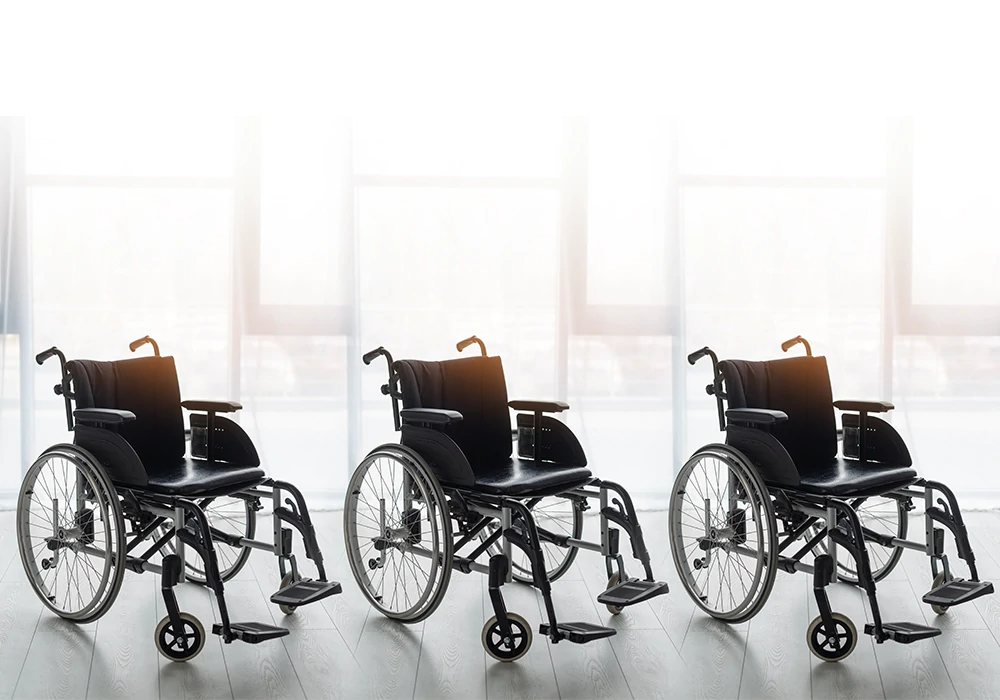
Project OverviewMobility impairment in resource-challenged urban and rural settings frequently isolates individuals with disabilities, cutting them off from basic education, healthcare, and employment. Without proper mobility aids, disabled citizens face severe physical limitations that compromise their fundamental human dignity and social inclusion. The Wheelchair Project for the Disabled was launched as a direct response to this humanitarian crisis. The primary purpose of this project is to supply customized, durable wheelchairs to individuals in need, directly restoring their physical mobility, fostering autonomy, and improving their holistic quality of life. Key Activities & ImplementationImplementation begins with thorough, field-level needs assessments conducted by ROSA NGO in close coordination with disability support networks, rehabilitation centers, and local healthcare professionals. Instead of generic distribution, the project custom-builds or procures highly specialized wheelchairs tailored to the unique physical measurements and environmental conditions of each beneficiary. Distribution events are carefully organized with practical, hands-on demonstrations where trained physiotherapists provide guidance on safe navigation and long-term maintenance. Local community leaders are heavily engaged to ensure the most marginalized individuals are identified and reached. Impact & Expected OutcomesThe immediate outcome of this project is the gift of physical freedom, enabling beneficiaries to move independently within their homes and communities without constant supervision. Short-term impacts include a visible reduction in social isolation, while long-term outcomes focus on seamless integration into active economic, social, and educational activities. By transforming dependent individuals into active, mobile participants in the local economy, the project promotes deep social equity. Built on strong, long-term partnerships with mobility aid manufacturers and healthcare providers, the project ensures long-term maintenance support and systemic inclusivity. 

Medical Service Distribution Project Among the Needy

Project OverviewEconomically disadvantaged and remote rural communities often suffer from a complete lack of accessible, affordable, and high-quality healthcare services. Due to financial constraints and geographical isolation, simple, treatable conditions frequently escalate into chronic, life-threatening illnesses, trapping families in a cycle of medical debt and poverty. The Medical Service Distribution Project Among the Needy was established to eliminate this health inequity. The core objective of this project is to provide essential preventive and curative medical care directly to underserved populations, ensuring health is treated as a fundamental human right regardless of socioeconomic standing. Key Activities & ImplementationThe project utilizes a dynamic, multi-pronged implementation strategy centered on mobile medical clinics and localized health camps. ROSA NGO deploys fully equipped mobile units directly into remote zones to offer free clinical consultations, vital diagnostic screenings, routine vaccinations, and essential medications. For complex health conditions, the project establishes formal referral linkages with specialized tertiary institutions. A core component is the integration of preventive health education workshops. Field teams engage local community members to host interactive sessions focused on hygiene, reproductive health, water sanitation, and balanced nutrition. Impact & Expected OutcomesThe project delivers immediate, life-saving interventions that drastically improve community health outcomes and reduce infant and maternal mortality rates. Early diagnosis and timely medical support prevent minor ailments from developing into severe financial shocks for impoverished families. In the short term, the project provides relief from seasonal diseases, while over the long term, it fosters a proactive culture of self-care and preventive hygiene. Sustained by strong institutional partnerships with pharmaceutical companies and government health agencies, this initiative successfully builds a highly resilient, healthy, and equitable rural society.