Giving Every Child a Chance: ROSA NGO's Commitment to Child Welfare and Education in Bangladesh
Introduction: Every Child Deserves a Fighting Chance
Childhood should be a time of
curiosity, laughter, and growth. But for thousands of children across
Bangladesh's rural communities, early life looks very different. Orphaned
children who have lost parental protection, children living with physical or
cognitive disabilities, and kids born into extreme poverty — all of these young
lives face challenges that no child should have to navigate alone.
ROSA NGO (Palli Sangstha)
believes, without reservation, that every child — regardless of circumstance —
deserves access to care, education, nutrition, and a stable foundation for the
future. That belief drives one of its most impactful program areas: child
welfare and education.
The Reality Facing Vulnerable Children in Rural Bangladesh
Orphaned Children: Growing Up Without a Safety Net
When children lose one or both
parents, the consequences extend far beyond grief. Without the economic and
social safety net that parents provide, orphaned children are at significantly
elevated risk of dropping out of school, falling into child labor, facing
exploitation, and missing critical developmental milestones. In rural
communities where extended family support is also strained, these children can
fall through the cracks entirely.
Children with Disabilities: Invisible and Underserved
Children living with physical or
intellectual disabilities face a compounded set of challenges. In many rural
communities, disability still carries social stigma — meaning these children
are often excluded from community activities, educational institutions, and
even family decision-making. Without specialized support structures, their
potential goes tragically unrealized.
The Nutrition and Health Crisis
Malnutrition among children in
low-income rural households remains a serious concern. Stunted physical growth,
weakened immune systems, and impaired cognitive development are the long-term
consequences of inadequate childhood nutrition — effects that last a lifetime
and diminish the prospects of an entire generation.
How ROSA NGO Reaches Bangladesh's Most Vulnerable Children
Solidarity Meals and Nutrition Programs
Among ROSA's most visible and
emotionally resonant child welfare initiatives are its community solidarity
programs, including organized meals for orphaned and disabled children and
adolescents.
These programs are deliberately
designed to do more than address hunger. By creating structured, celebratory,
community-oriented events, ROSA provides participating children with something
equally as vital as nutrition: a sense of belonging and social recognition.
Children who are often made to feel invisible by their circumstances experience
genuine joy, connection, and the knowledge that their community sees and values
them.
Educational Support and School Access
Education is the single most
powerful predictor of a child's future. ROSA's educational support programs
work on multiple levels:
•
Identifying children who have dropped out or never
enrolled
•
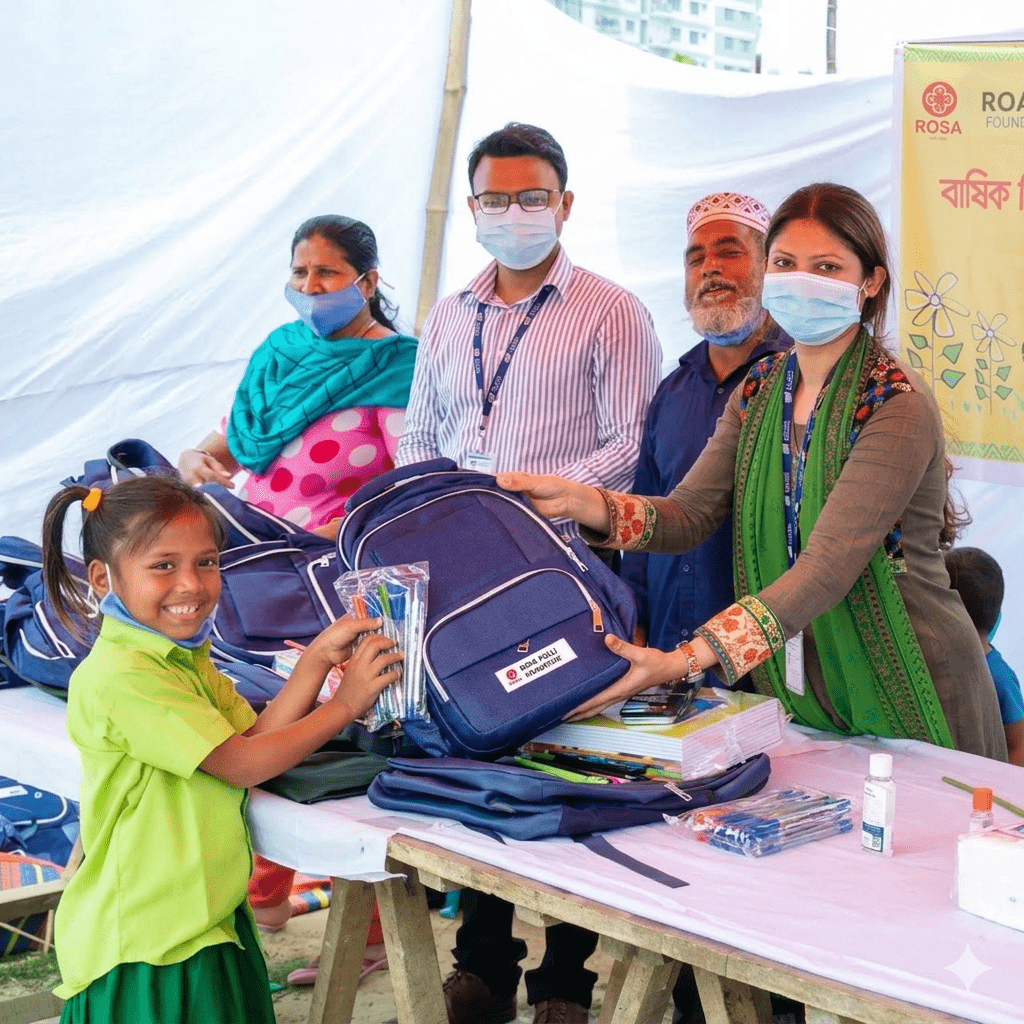
Providing school supplies, uniforms, and materials to
remove financial barriers
•
Working with families to demonstrate the long-term
value of keeping girls and boys in school
•
Supporting children with disabilities in accessing
inclusive education environments
•
Facilitating after-school tutoring and mentorship for
academically struggling children
Psychosocial Support and Child Development
Children who have experienced
loss, poverty, or social exclusion often carry invisible emotional burdens.
ROSA's community volunteers and social workers are trained to identify signs of
distress, provide basic psychosocial support, and connect families with
appropriate mental health and counseling resources. Building emotional
resilience in children is just as important as addressing their physical and
educational needs.
Building Inclusive Communities Around Children
ROSA NGO's child welfare work
does not happen in isolation. A core principle of the organization's approach
is community mobilization — actively engaging local leaders, teachers,
religious figures, and volunteers to build a network of care around vulnerable
children.
When a community collectively
commits to the welfare of its most vulnerable young members, the impact
multiplies. Children receive not just institutional support, but the warmth and
accountability of people who know them, live near them, and are invested in
their futures.
This community-centered approach
also helps combat the social stigmas that often worsen outcomes for orphaned
children and children with disabilities. Through awareness campaigns and direct
engagement, ROSA works to replace exclusion with inclusion at the community
level.
The Ripple Effect: Why Investing in Children Matters
The impact of child welfare
investment extends decades into the future. Children who receive proper
nutrition develop healthier bodies and sharper minds. Children who complete
their education earn more, spend more on their own children's health and schooling,
and contribute more productively to their communities. Children who grow up
feeling valued and included build healthier relationships and more stable
families.
The children ROSA supports today
are the parents, educators, entrepreneurs, and community leaders of tomorrow.
Investing in their welfare now is investing in the entire future trajectory of
their communities.
Conclusion: A Country's Future Lives in Its Children
Bangladesh's remarkable
development progress over the past decades has been built in part on expanding
investments in children — their health, education, and welfare. But progress
has not reached every corner of the country equally. In the rural communities
where ROSA operates, too many children are still being left behind.
ROSA NGO is determined to change
that — one child at a time, one program at a time, one community at a time.
Because a Bangladesh where every child has a fighting chance is a Bangladesh
with a brighter future for all.