Building Resilient Communities: ROSA NGO's Holistic Approach to Sustainable Rural Development in Bangladesh
Introduction: Real Development Starts at the Grassroots
Walk through the rural
communities of Bangladesh and you will find resilience in unexpected places.
You will find it in the easy-bike driver who wakes before sunrise to provide
for his family. In the mother who stretches every taka to keep her children in
school. In the elderly woman who has worked the land for decades without ever
once seeing a doctor. In the young person with a disability who has more to
contribute than anyone has given them the opportunity to show.
These individuals don't need
sympathy. They need systems. Structures that give their effort a fair chance.
Opportunities that match their ambition. Support that is sustained, dignified,
and community-rooted rather than paternalistic or temporary.
That is the foundation on which
ROSA NGO (Palli Sangstha) builds. And it is why ROSA's model of sustainable
community development is not just changing individual lives — it is changing
the trajectory of entire communities.
What Sustainable Community Development Actually Means
In the development sector, the
word 'sustainable' is often overused and under-delivered. For ROSA,
sustainability is not a branding exercise. It is a design principle applied to
every program, partnership, and community interaction.
Genuine sustainable development
means:
•
Creating programs that communities can eventually own
and operate independently
•
Addressing root causes of poverty and marginalization —
not just symptoms
•
Building local capacities, not permanent dependencies
•
Integrating economic, social, and health dimensions
together, not in silos
•
Measuring success in generational terms, not just
project cycles
ROSA's programs are built on
this philosophy from inception to implementation.
ROSA's Integrated Development Framework
Economic Empowerment as the Anchor
Sustainable community
development cannot happen without economic stability at the household level.
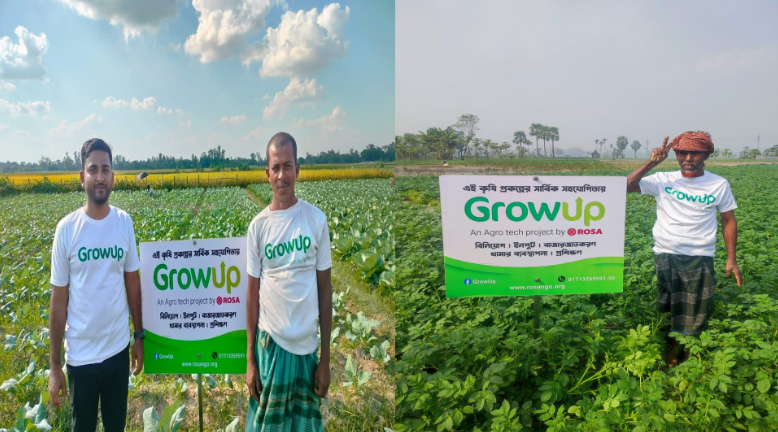
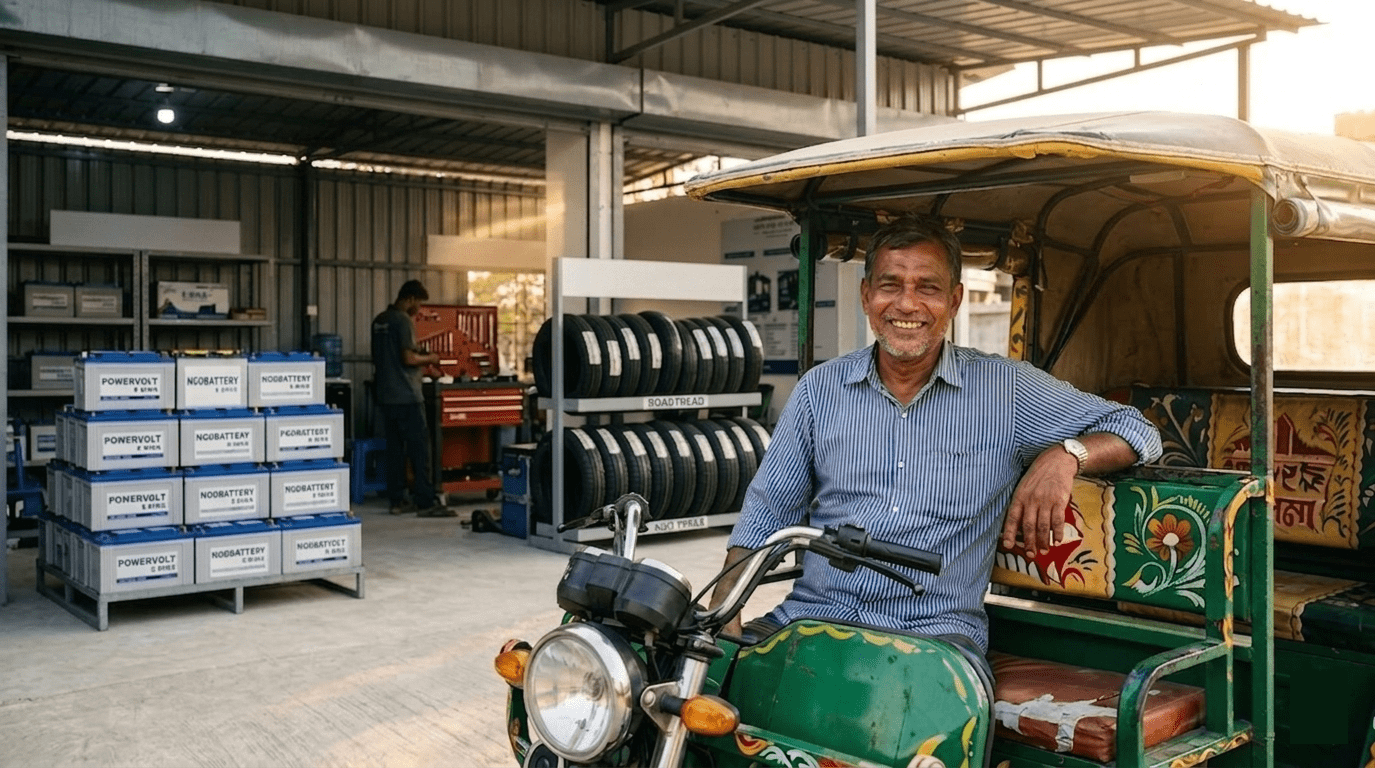
ROSA's economic programs — from interest-free microfinance for small
entrepreneurs, to vehicle support for easy-bike drivers, to skill training for
disadvantaged women — are all designed with a single goal: enabling households
to generate reliable income without falling prey to exploitative systems.
Economic stability doesn't just
feed families today. It funds school fees, medical visits, and home
improvements. It builds the material foundation upon which all other dimensions
of development depend.
Social Welfare as the Safety Net
Even with economic programs in
place, some individuals and families will always need an extra layer of support
— the orphaned child, the person with a disability, the elderly person living
alone, the family hit by sudden crisis. ROSA's social welfare programs are
designed to catch these individuals before they fall through the cracks
entirely.
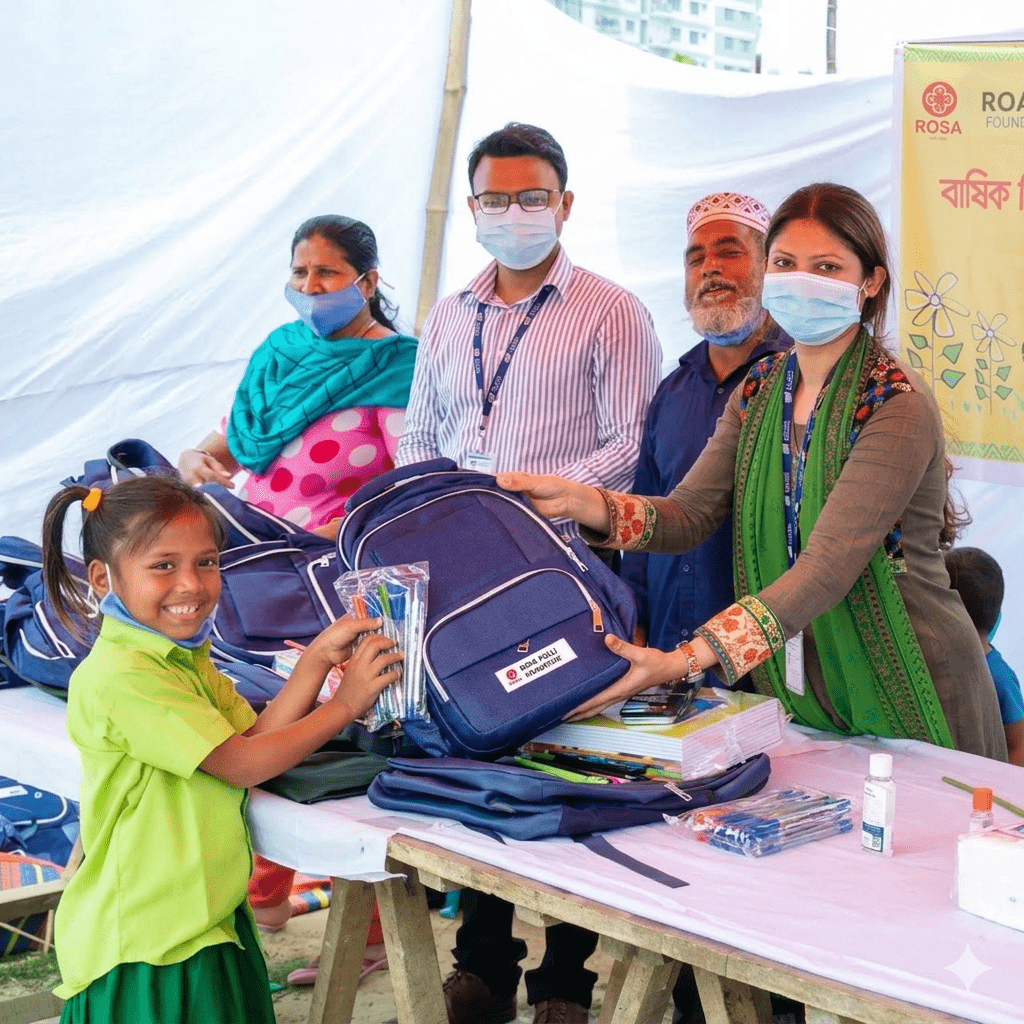
Programs supporting orphaned and
disabled children, solidarity meals, and community care initiatives are not
charity for their own sake — they are strategic investments in social cohesion.
A community that takes care of its most vulnerable members is a community with
stronger bonds, higher trust, and greater collective resilience.
Healthcare as the Foundation
Development gains evaporate
quickly when community health is neglected. A family dealing with a chronic,
untreated illness loses income, depletes savings, and falls back into debt —
sometimes undoing years of economic progress in a single medical crisis.
ROSA's health programs prevent
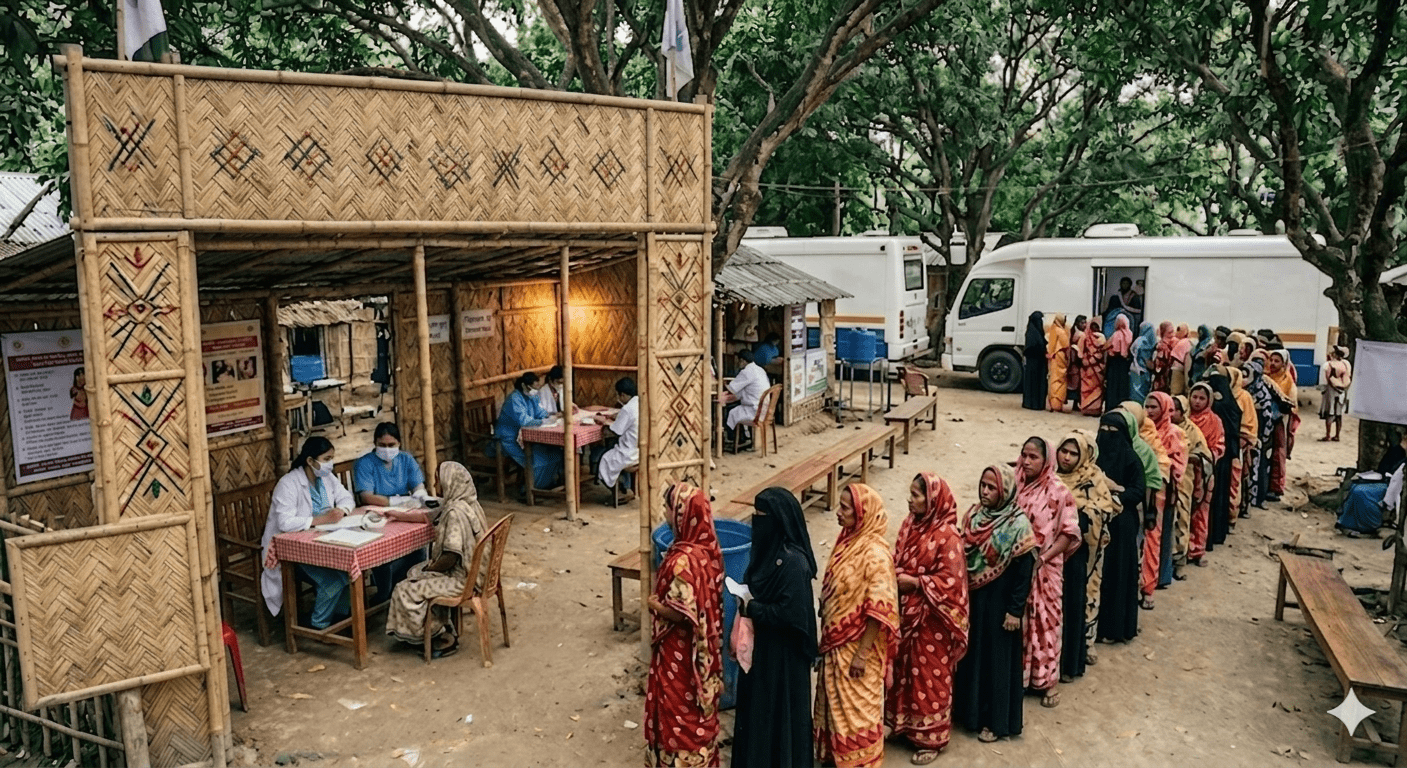
this by building preventive health capacity into communities. Free medical
camps, health education initiatives, and community health worker networks mean
that health crises are identified earlier, managed more effectively, and less
likely to become financial catastrophes.
Expanding Impact Across Bangladesh: Seven Districts and Beyond
ROSA NGO's operational footprint
is growing. With official approval from the Ministry of Social Welfare of
Bangladesh to expand socio-economic activities across seven districts, the
organization is entering a new phase of scaled impact.
This expansion is significant
not only for the number of additional communities it will reach, but for what
the official endorsement represents: institutional confidence in ROSA's
approach, transparency in its governance, and proven track record in the districts
where it has already been operating.
The expansion plan is structured
for impact, not speed. New district operations are being established with the
same careful community consultation, local partnership development, and
programmatic rigor that has characterized ROSA's work in its existing operational
areas.
Community Ownership: The Real Measure of Success
ROSA's most important metric is
not the number of beneficiaries served in any given year. It is the degree to
which communities served by ROSA are increasingly able to solve their own
problems, advocate for their own needs, and support their own most vulnerable
members.
That shift — from passive
recipients of development services to active agents of community change — is
visible in communities where ROSA has been working longest. Local volunteers
trained by ROSA health programs now serve as community health advocates year-round,
not just during camps. Women who received ROSA's microfinance support now
mentor new program entrants. Easy-bike drivers who benefited from interest-free
loans are vocal advocates for financial inclusion in their communities.
This is what sustainable
development looks like when it works: not an organization doing things for
communities, but communities increasingly capable of doing things for
themselves.
Why ROSA's Approach Matters for Bangladesh's Future
Bangladesh is a country of
extraordinary development achievement. Progress made over recent decades in
poverty reduction, maternal and child health, and girls' education is rightly
celebrated globally.
But that progress has not been
uniform. Geographic, social, and economic inequalities mean that many rural
communities still lag significantly behind national averages on nearly every
development indicator. Closing these gaps is not just a moral imperative — it
is a strategic economic necessity for a Bangladesh that aspires to
middle-income status and beyond.
Organizations like ROSA,
operating at the community level with integrated approaches and long-term
commitments, are essential partners in that national project. Their work
complements government programs, reaches communities that formal systems miss,
and builds the human capital that underpins sustainable national growth.
Conclusion: Development That Lasts Begins With People
Grand national development
strategies matter. Macroeconomic policy matters. Infrastructure investment
matters. But in the end, development that actually changes lives happens at the
level of individual communities — in the decisions that families make, the
opportunities that local organizations create, and the support structures that
allow the most vulnerable to hold their ground and move forward.
ROSA NGO is committed to being
that support structure — not just for the communities it currently serves, but
for every rural Bangladeshi community where opportunity and resilience are
waiting for the right conditions to flourish.
A stronger Bangladesh is built
from the ground up. ROSA is proud to be part of that foundation.