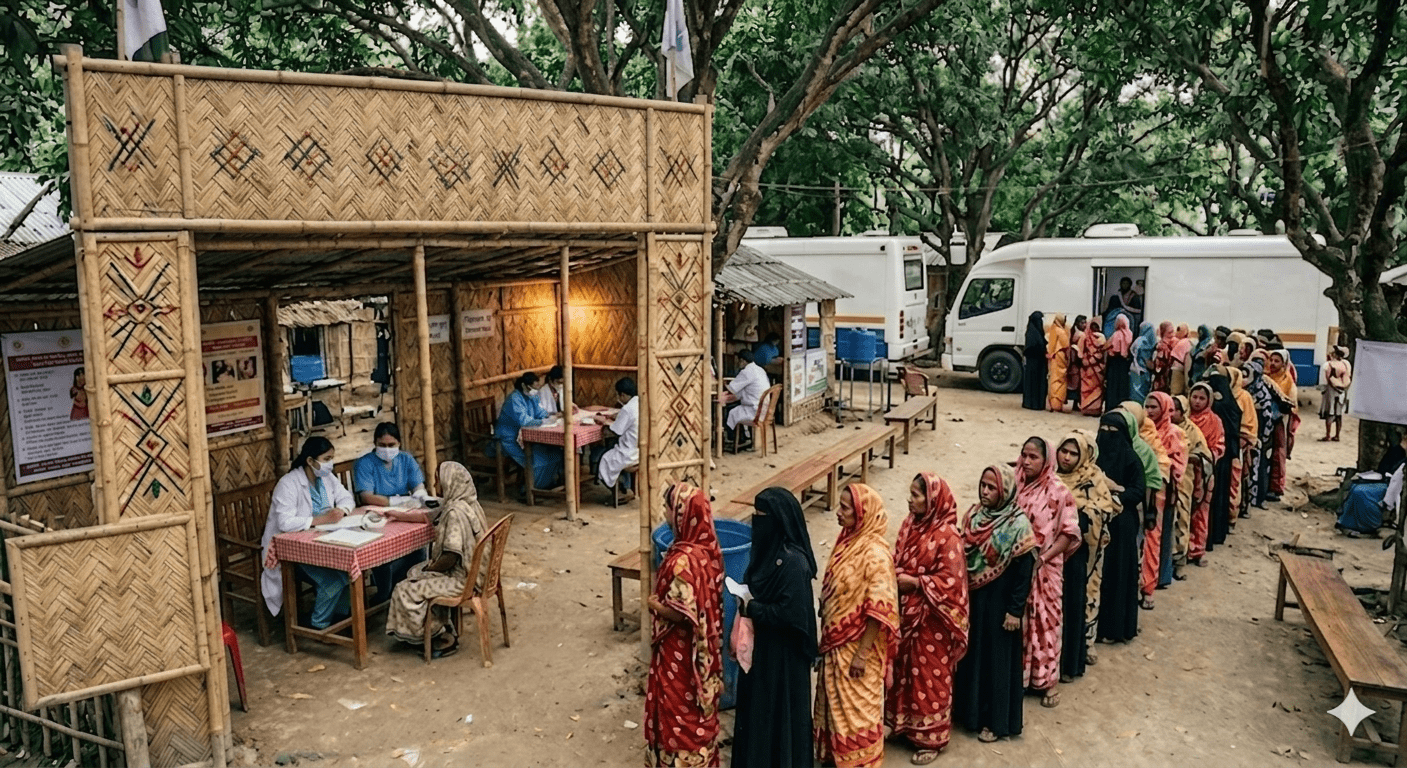
Bridging the Healthcare Gap: ROSA NGO's Free Medical Camps Bring Hope to Rural Communities
Introduction: When Distance Means Disease
In rural Bangladesh, the
distance to a qualified doctor can feel like a world away. For elderly men and
women who can no longer travel easily, for mothers stretched thin caring for
their families, and for low-income households where a doctor's fee competes
directly with a day's meals — quality healthcare is not a given. It is a
luxury.
The consequences are severe and
well-documented: chronic conditions that go undetected until they become
life-threatening, preventable deaths from treatable diseases, and entire
communities where poor health quietly undermines productivity, education, and
family stability.
ROSA NGO (Palli Sangstha) is
directly confronting this healthcare gap through its 'Health for All' (Sobar
Jonno Shastho) initiative — a program that carries certified medical care
directly to the doorsteps of Bangladesh's most underserved rural communities.
Why Rural Healthcare Access Remains a Critical Challenge
The Economic Barrier
For a daily wage earner, the
cost of a specialist consultation, diagnostic tests, and prescription medicines
can represent several days' income. When every taka is spoken for, healthcare
invariably falls to the bottom of the priority list — until a manageable health
condition becomes a medical emergency.
The Distance Barrier
Rural health facilities, where
they exist, are often understaffed and under-equipped. Qualified specialists
are concentrated in urban centres, leaving rural populations reliant on
overextended community health workers or unqualified local practitioners whose
advice can sometimes cause more harm than good.
The Awareness Gap
In many rural communities, low
health literacy means that symptoms of serious conditions — elevated blood
pressure, rising blood sugar, early-stage respiratory disease — go unrecognized
until they have already caused significant damage. Preventive health simply
isn't part of the cultural conversation in communities where survival is the
immediate priority.
ROSA's 'Health for All' Initiative: A Comprehensive Model
ROSA's free medical camps are
carefully designed to address the full spectrum of healthcare barriers facing
rural communities. Each camp is far more than a temporary distribution of
medicines — it is a structured health intervention that combines diagnostics,
expert consultation, treatment, and health education.
What Happens at a ROSA Health Camp
Each beneficiary attending a
ROSA health camp moves through a systematic, multi-stage process:
•
Registration and Health History Review: Community
health workers document each patient's medical history, current symptoms, and
household health status.
•
Vital Diagnostics and Screenings: Trained medical
technicians conduct blood pressure monitoring, blood sugar (diabetes) testing,
BMI assessment, and other critical screenings.
•
Certified Doctor Consultation: Each patient receives
personalized attention from a qualified physician who reviews their diagnostic
results, listens to their concerns, and provides a professional medical
assessment.
•
Free Medicine Distribution: Based on the doctor's
prescription, patients receive essential medications — vitamins, chronic
disease medications, antibiotics — at no cost.
•
Specialized Counselling for Women and Mothers: Women
attending the camps receive targeted awareness sessions on maternal health,
nutrition, family planning, and preventive hygiene.
Prioritizing the Pillars of Rural Communities
Serving the Elderly
Senior citizens in rural
Bangladesh are among the most healthcare-neglected populations in the country.
Years of physical labour, limited preventive care, and age-related decline
leave many elderly men and women managing chronic pain, mobility challenges,
and serious undiagnosed conditions in silence. ROSA's health camps offer these
individuals — often for the first time in years — access to professional
medical attention and the dignity of genuine care.
Supporting Vulnerable Women
Rural women bear a
disproportionate share of household health burdens while often being the last
to prioritize their own medical needs. Nutritional deficiencies, maternal
health complications, and unaddressed chronic conditions are common. ROSA's
health camps create a structured, safe, and supportive environment where women
can receive the care they deserve — and gain the health knowledge to advocate
for themselves going forward.
Beyond the Camp: Building a Culture of Health Awareness
The impact of a ROSA health camp
does not end when the tent comes down. Community health volunteers trained by
ROSA remain active in the months following each camp, conducting follow-up
visits, distributing health education materials, and identifying community
members who require ongoing medical attention.
This sustained presence
transforms one-day events into the foundation of a longer-term community health
culture — where preventive care, early detection, and regular health monitoring
gradually become community norms rather than exceptional occurrences.
The Wider Social Impact
Healthy communities are
productive communities. When elderly citizens receive treatment for chronic
conditions, they maintain their roles within their families and communities
longer. When women are healthy and health-literate, their children are better nourished,
better educated, and more likely to grow into healthy, productive adults.
ROSA's health interventions also
provide crucial economic relief. A family that doesn't have to take emergency
loans to cover a medical crisis is a family that retains more control over its
financial future. In this way, ROSA's health programs directly reinforce its
broader mission of economic empowerment and poverty reduction.
Conclusion: Health Is Not a Privilege — It Is a Right
No citizen of Bangladesh should
face a preventable health crisis because they could not afford a doctor's
visit. No elderly parent should suffer in silence because the nearest qualified
physician is too far and too expensive to reach. No mother should go without
essential medical care because her household's budget leaves no room for her
needs.
ROSA NGO is building toward a
Bangladesh where access to quality healthcare is a community standard — not a
privilege reserved for those with means. Through the 'Health for All'
initiative, one camp, one community, and one patient at a time, that future is
getting closer.